
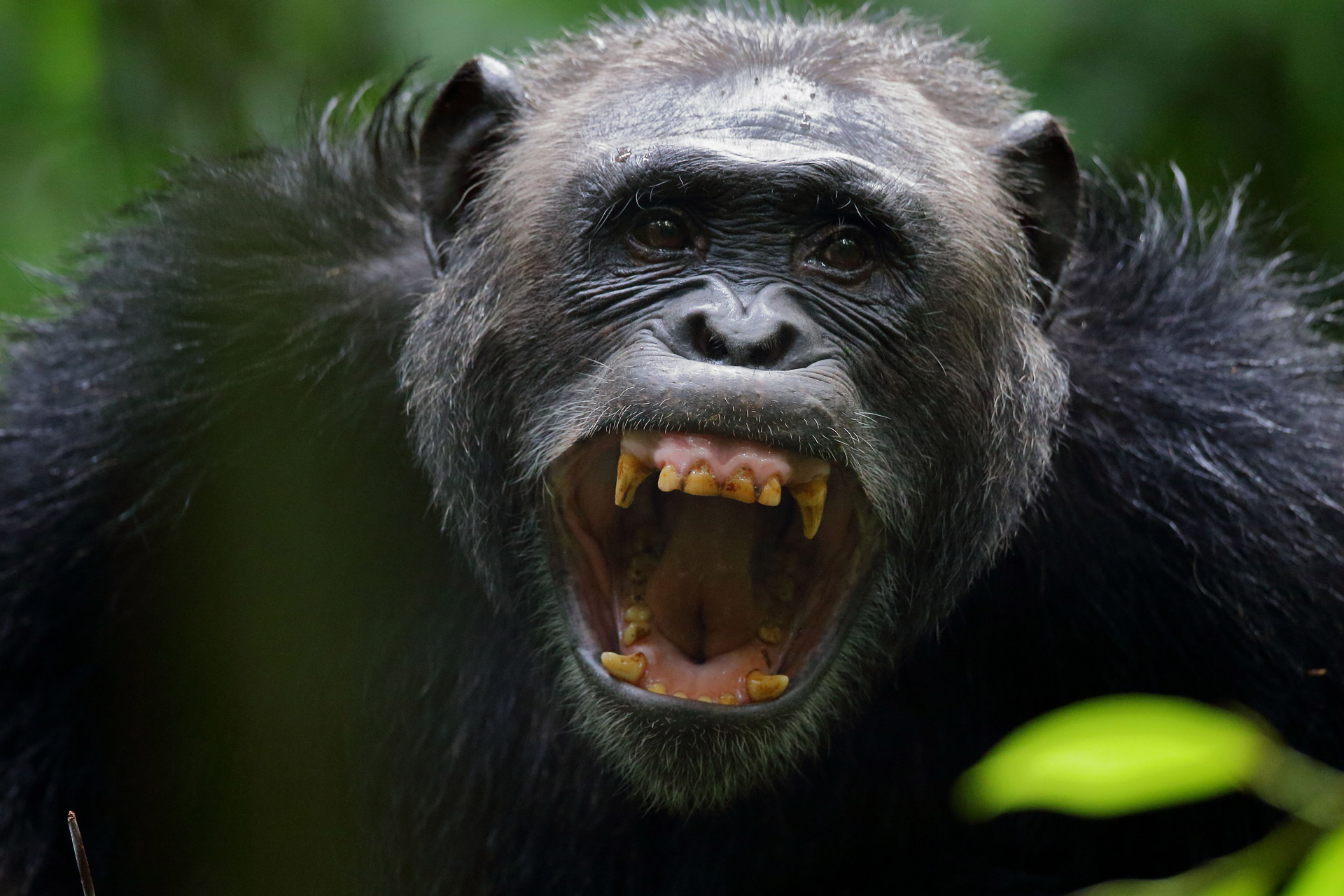
Inside Kibale National Park’s Chimpanzee Conflict.
Deep in western Uganda, within the rich green canopy of Kibale National Park, a remarkable and complex story is unfolding, one that is changing how we see wildlife, and ourselves.
Known as the primate capital of the world, Kibale is home to over 1,500 chimpanzees. For years, tourists have visited this forest to experience chimp tracking, observe their behaviors, and connect with one of humanity’s closest relatives. But beyond the usual excitement of spotting chimpanzees in the wild, a deeper, more dramatic narrative has emerged.
What many researchers describe as a chimpanzee “civil war” is taking place within one of Kibale national park’s most studied chimp communities, the Ngogo group. While the term “civil war” may sound dramatic, the reality is a rare and powerful example of how animal societies can change, divide, and adapt under pressure.
A once peaceful community.
For over 20 years, the Ngogo chimpanzees lived in what scientists considered a stable and cooperative society. With nearly 200 individuals, it was one of the largest chimpanzee communities ever recorded.
These chimpanzees were not just surviving, they were thriving. They formed strong social bonds, groomed one another, shared food, and moved through the forest as one united group. Their behavior made them a valuable focus for researchers from institutions like Makerere University and conservation bodies such as Uganda Wildlife Authority.
Chimpanzees are known for their intelligence and emotional depth. They communicate through sounds and gestures, build alliances, and even show signs of empathy. In Ngogo, these traits were clearly visible in the way the group functioned.
But over time, subtle changes began to appear.
When small changes began to grow.
Around 2015, researchers started noticing unusual patterns. Some chimpanzees began to distance themselves from others. Social bonds that once seemed unbreakable started to weaken. Small disagreements became more frequent.
At first, these changes seemed minor, normal shifts within a large social group. But they slowly grew into something much more serious.
The once united community began to split.
Two rival factions emerged, each moving separately through the forest. Encounters between the groups became tense. Then, eventually, they became violent.
Chimpanzees from one group began launching coordinated attacks on members of the other. These were not random fights, they were planned and often involved multiple individuals targeting a single chimpanzee. Over time, researchers recorded the loss of more than 20 individuals, including infants and adult males.
This level of organized and sustained conflict is rare, even among chimpanzees. It is one of the most detailed and long-lasting cases of internal division ever observed in the wild.
A reflection of human nature.
What makes this story so powerful is how closely it mirrors human society.
Chimpanzees share about 98% of human DNA. Their social systems, in many ways, resemble our own. They form friendships, compete for leadership, defend territory, and build alliances.
The events unfolding in Kibale reflect patterns often seen in human communities:
- Division over power and leadership.
- Breakdown of relationships.
- Formation of rival groups.
- Organized conflict for survival and control.
This is why scientists around the world are paying close attention. The situation offers a rare opportunity to study the roots of conflict, cooperation, and social change in a species so closely related to us.
However, experts emphasize that this is not a “war” in the human sense. It is a natural process influenced by environmental factors, population size, and internal social dynamics.
Still, the similarities are striking and thought-provoking.
A great opportunity for ecotourism.
While the story may seem intense, it presents a powerful opportunity for Uganda’s ecotourism industry.
Today’s travelers are looking for more than just sightseeing. They want meaningful experiences, stories that connect them to the places they visit.
Kibale National Park now offers exactly that.
- Story driven tourism.
The chimpanzee conflict transforms a normal wildlife visit into a deeper experience. Visitors are no longer just observing animals, they are witnessing a living story.
Tour guides can share insights about:
- Chimpanzee relationships and behavior.
- The history of the Ngogo community.
- The causes and effects of the conflict.
- The similarities between chimpanzees and humans.
This kind of storytelling creates a more emotional and memorable experience for tourists.
- Global attention.
Stories like this attract international interest. Media houses, researchers, and wildlife enthusiasts are naturally drawn to rare and complex events in nature.
Organizations such as National Geographic and BBC Earth are known for highlighting unique wildlife stories. Kibale’s chimpanzee conflict has the potential to become a major subject for documentaries and global features.
This kind of exposure can significantly boost Uganda’s tourism profile.
- Scientific and educational tourism.
Kibale has long been a center for research, but this ongoing situation adds even more value. It can attract:
- Scientists studying animal behavior.
- Students and researchers from universities.
- Documentary filmmakers.
- Conservation organizations.
Learning directly from such a rare event makes Kibale an even more important destination for education and research.
- Promoting conservation.
At its core, ecotourism is about protecting nature while benefiting people.
The chimpanzee conflict highlights how delicate wildlife societies can be. Factors like habitat pressure, food availability, and population changes all play a role in shaping behavior.
By sharing this story responsibly, Uganda can:
- Raise awareness about conservation.
- Encourage responsible tourism.
- Generate funding for wildlife protection.
Groups like the Jane Goodall Institute have long emphasized the importance of understanding chimpanzees to protect them. This story adds urgency and depth to that mission.
Balancing tourism and responsibility.
While the tourism potential is strong, it must be handled carefully.
Turning the conflict into entertainment or exaggerating it could harm both the chimpanzees and their habitat. It is important to present the story accurately as a natural and scientific phenomenon, not a spectacle.
Tourism activities in Kibale should always prioritize the well-being of the animals and respect the balance of their environment.
Way forward.
The ongoing chimpanzee conflict in Kibale National Park is one of the most fascinating wildlife stories in the world today.
It reveals the complexity of animal societies and challenges us to reflect on our own. It shows that conflict, cooperation, and survival are not just human experiences but part of life in the natural world.
More importantly, it offers Uganda a wonderful opportunity.
By combining storytelling, science and conservation, this narrative can transform Kibale into more than just a tourist destination. It can become a place where visitors come not only to see wildlife but to understand it.
In this forest, divided though it may be, lies a powerful connection between humans and nature, one that the world is only beginning to discover.