
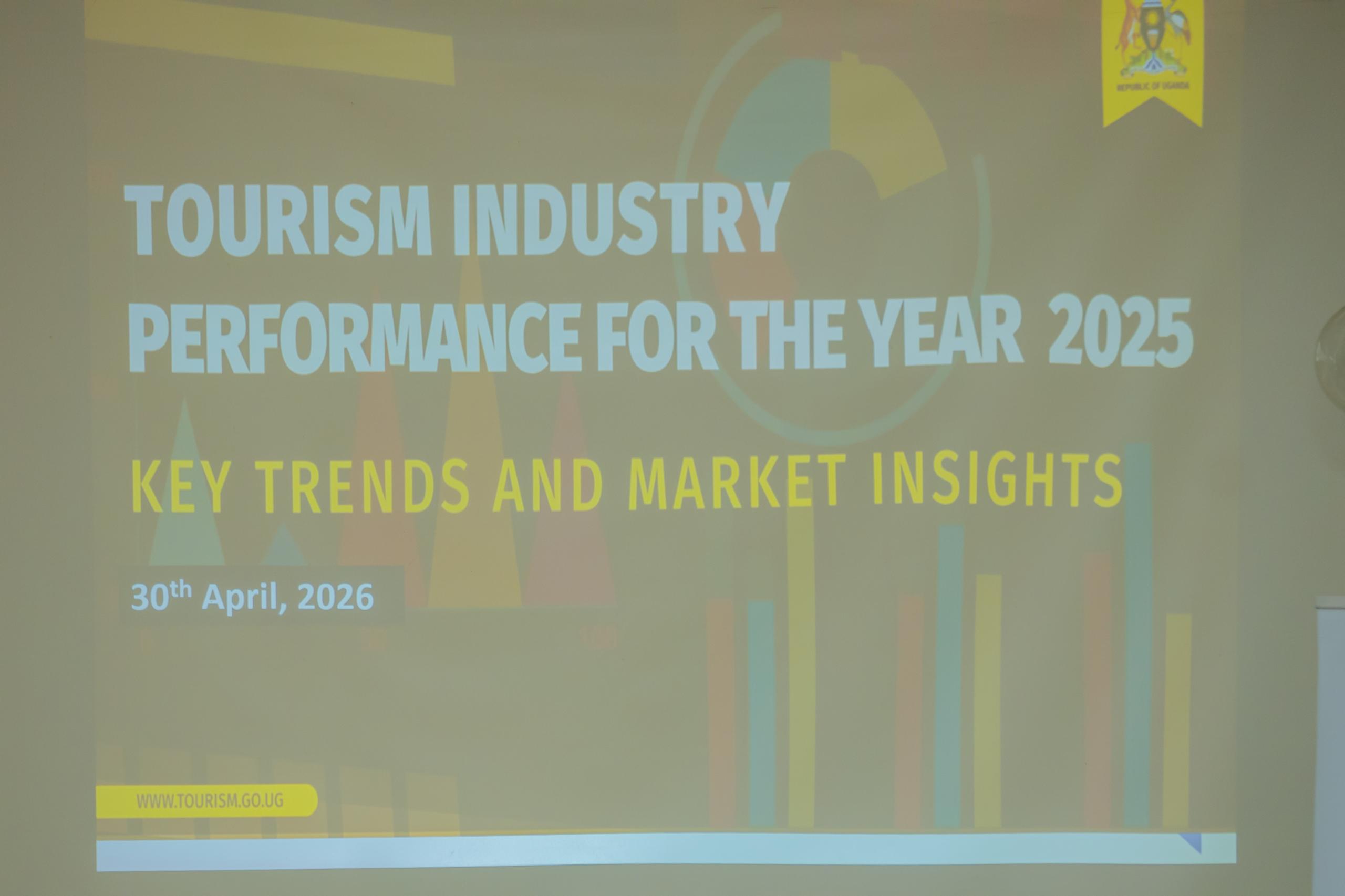
Uganda’s tourism industry has entered a new phase of growth, with newly released data showing record-breaking performance, rising global interest, and expanding opportunities, particularly for young people exploring careers in the sector.
At the official dissemination of the Tourism Statistical Abstract 2025 held on the 30th of April, 2026 at Imperial Royale Hotel, the Ministry of Tourism, Wildlife and Antiquities, working alongside the Uganda Bureau of Statistics, indicated that the sector has not only recovered from the effects of the pandemic but is now firmly on a strong growth trajectory.
 According to the report, Uganda recorded over 1.6 million international tourist arrivals in 2025, surpassing pre-pandemic levels. Tourism earnings rose to approximately UGX 5.8 trillion (about USD 1.62 billion), while the average length of stay increased to 8.8 nights, reflecting deeper visitor engagement and greater economic value per traveler.
The report noted that average tourist expenditure approached USD 986 per trip, with even higher spending among leisure travelers, an indication that Uganda is increasingly attracting higher-value visitors.
Tourism as a Driver of Jobs and Growth.
The report further indicates that tourism contributed an estimated 5.9% to Uganda’s Gross Domestic Product (GDP) and directly supported over 876,000 jobs, accounting for about 7.5% of total employment in the country.
The Ministry highlighted that these gains were the result of deliberate interventions, including strengthened destination marketing under the Explore Uganda brand, investment in infrastructure, and closer collaboration with private sector players and development partners.
It also emphasized that tourism should be understood not only in terms of revenue and arrivals, but as a sector that supports livelihoods, promotes culture, and contributes to national transformation, an aspect increasingly resonating with younger generations.
A Shift Toward Experience-Led Travel.
The data points to a growing shift in traveler behavior, with visitors staying longer and seeking more immersive experiences. Officials observed that this trend aligns with global patterns, where travelers particularly younger ones are prioritizing authenticity, culture, and meaningful engagement over short, transactional visits.
In addition, the report highlights diversification in source markets, with overseas arrivals contributing a larger share of visitors, alongside continued growth in high-value segments such as leisure tourism and business travel.
Strengthening Data for Better Decisions.
The Ministry stressed that the Statistical Abstract is designed to guide planning, investment, and policy decisions across the tourism sector. The publication draws on multiple data systems, including immigration tracking and expenditure surveys, to provide a comprehensive picture of sector performance.
Added efforts are ongoing to strengthen the tourism data ecosystem through initiatives such as the Tourism Information Management System (TIMS) and the Tourism Satellite Account (TSA), which aim to improve the accuracy, timeliness, and global comparability of tourism statistics.
Focus on the Road Ahead.
Despite the strong performance, the private sector emphasized the need to address existing gaps. These include improving tourism infrastructure and accessibility, increasing investment in quality accommodation, strengthening domestic tourism, and enhancing real-time data systems.
There was also recognition of the importance of ensuring that tourism growth translates into inclusive benefits for communities across the country.
A Sector Full of Opportunity.
With Uganda’s population largely youthful, the tourism sector is increasingly being viewed as a space for innovation, entrepreneurship, and creative expression. From digital storytelling and travel content creation to tour operations and hospitality services, young people are playing a growing role in shaping the sector’s future.
As Uganda continues to position itself as a preferred global destination, the 2025 tourism performance data signals more than just recovery, it points to a sector gaining momentum and redefining its place in the country’s economic and social landscape.