
It was a bright June morning when I set out to collect data for my research in the heart of Southwestern Uganda. Balanced on the back of a boda boda, I clung tightly as we moved along the dusty paths, weaving through rolling hills and scattered homesteads. The red dust rose and wrapped around me like a second skin; my clothes, my hair, even my once-white interview papers turned a proud shade of brown. I could only laugh at myself, imagining how I must have looked: a walking dust cloud on a mission.
But none of that mattered to the friendly faces that greeted me in the local communities. Everywhere we stopped, people smiled, waved, and whispered in excitement at the sight of a new visitor. Children peeked shyly from behind their mothers, and elders nodded in warm approval. I felt welcomed by strangers who didn’t care about my dusty appearance; only that I was there to learn and share.
One stop I will never forget was at Gorilla Heights Lodge in Nkuringo. Tired and coated in dust, I expected to be turned away at such a luxury place. But to my surprise, the manager welcomed me with kindness after learning I was a student. Without hesitation, they invited me to sit in the grand lounge, where my wide eyes gazed at the beautifully crafted ceiling and elegant décor. The chandeliers sparkled in the soft light, and the furniture, carved from rich local wood, told its own story of craftsmanship. I was served fresh juice and cookies on a silver tray, and for a moment, I forgot I was on a research trip. I felt like a treasured guest, not a dusty traveler.
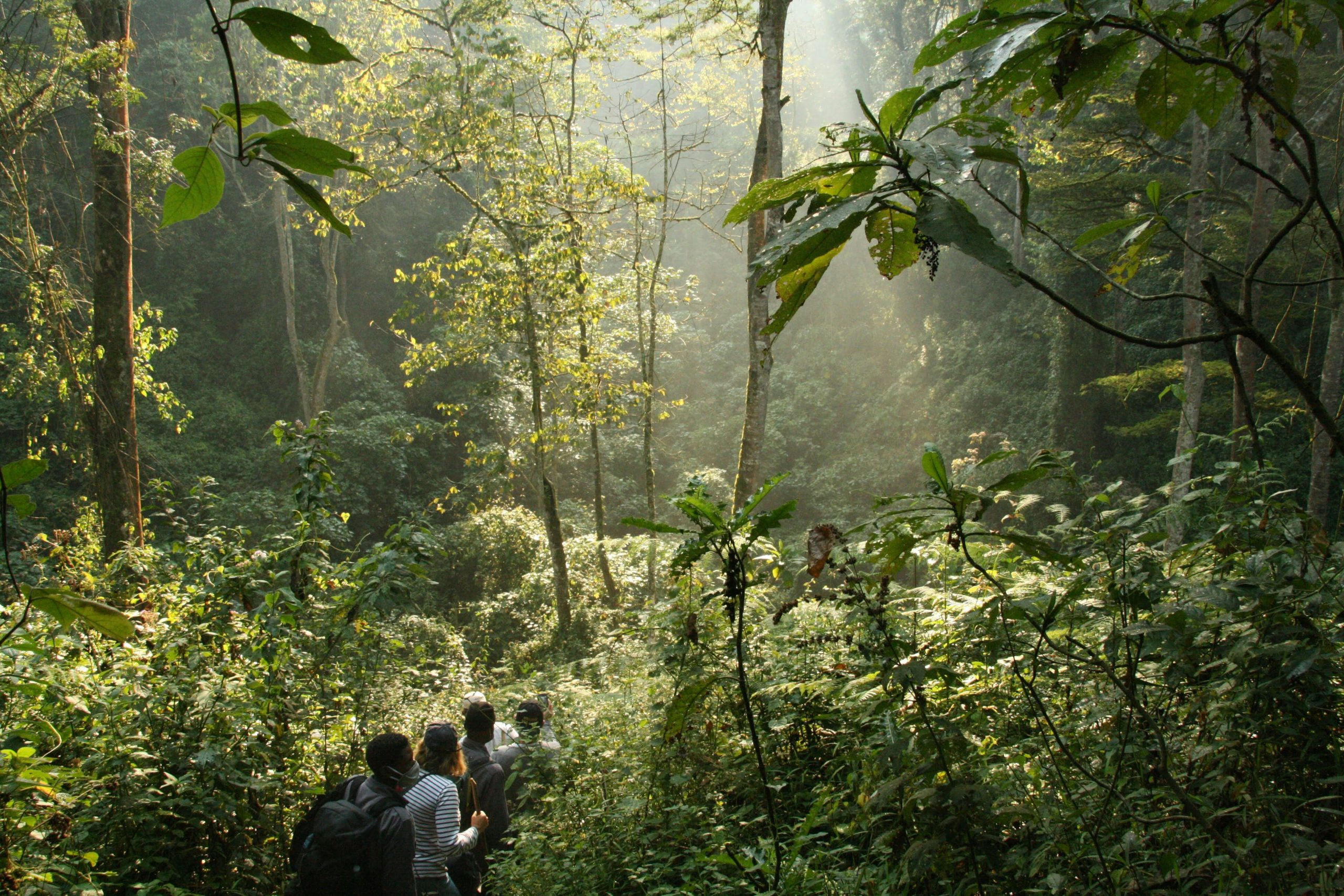
The next day, a Sunday, public transport was scarce. Determined, I climbed onto another boda-boda bound for Ruhija. The road twisted through Bwindi Impenetrable Forest, and at times, it seemed as though we were heading into thick walls of green with no way through. But as we drew closer, hidden paths revealed themselves, leading us deeper into the forest’s heart.
The air felt alive. Birds sang sweet and strange songs. The forest whispered in a language I couldn’t speak but somehow understood. The chants of the trees, the rustling leaves, the playful calls of monkeys; it was nature’s orchestra. I didn’t want to miss a single breath of that fresh, cool air. Every pothole, every bump faded away as the forest wrapped me in its beauty. The world beyond that moment no longer existed.
As we continued through the forest’s winding paths, I asked the boda boda rider to slow down. I wanted to take it all in; the tall trees draped in vines, the bursts of wildflowers I hadn’t noticed before, the sunbeams slipping through the canopy like threads of gold. Every bend revealed something new: a playful monkey swinging out of sight, a giant butterfly with wings like painted leaves, a sudden silence that made my heart race, followed by the softest rustle of the wind. I tried to capture the moment with my camera, but no photo could do it justice. The forest’s beauty was more than what I could see. It was what I felt; a sense of wonder, of peace, of connection to something larger than myself. And as we rode on, I thought of the people who lived near this treasure, of how important it was that we protect this place, not just for tourists, but for the generations who call Bwindi home. I imagined the forest telling its own story, urging us to listen, to respect, and to care.
When we reached the first park gate, the officer asked, “What are you going to do?” I looked at myself; dust-covered clothes, brown interview sheets, hair thick with forest dust. But I smiled. To me, it wasn’t dirt. It was a badge of the adventure, the magic of Bwindi carried on my skin. I took a deep breath, filling my lungs with the cool, fresh air that seemed sweeter than anything I had ever known. I explained my mission: that I was a student, here to collect data for my research study. The officer’s serious face softened, and with a nod, he waved us through. As we continued, I felt not like an outsider anymore, but like someone invited into the heart of this special place.
At Bakiga Lodge that evening, I sat quietly, watching through the window as the sky changed colours, painting the hills in soft gold and pink. From where I sat, I saw the Batwa from the nearby community arrive, their faces glowing with pride. They shared stories of their ancestors; of resilience, of survival, before beginning to dance. The sound of their
drums and singing voices floated through the air and reached me where I sat. I watched as tourists clapped, smiled, and a few even joined the dance, moving awkwardly at first, then freely, as joy took over. From my window, I saw the connection, the shared happiness, and I felt part of it too, even in my quiet corner.
After the performance, I stepped outside and walked quietly through the cool evening air. I watched as the tourists lingered, drawn to the local craft stalls set up near the lodge. The soft glow of lamps lit up the tables where women displayed handwoven baskets, beaded necklaces, and wooden carvings, each piece telling its own story of the land and the people. I saw a group of visitors laughing gently as they tried on bark-cloth hats and admired the delicate patterns of the Batwa jewelry. A few tourists, curious and open-hearted, asked questions about how the crafts were made, listening with genuine interest as the artisans explained. I felt a quiet pride watching these moments; strangers from far away finding common ground through shared curiosity and respect. Nearby, a small group gathered at a community stall, sipping obushera and learning about how it is prepared. There was no rush, no barrier between visitor and host. It was as if, for that evening, we were all part of the same village, connected by the beauty of the place and the warmth of its people.
Yes, I had gone to collect data. But I returned with so much more. My journey through dust and forest taught me that travel is not only about seeing new places. It’s about feeling the heartbeat of a land, hearing the music of its people, and understanding the need to protect these wonders.
Bwindi’s beauty, its culture, and its people remind us why conservation matters; not just for today, but for generations to come.