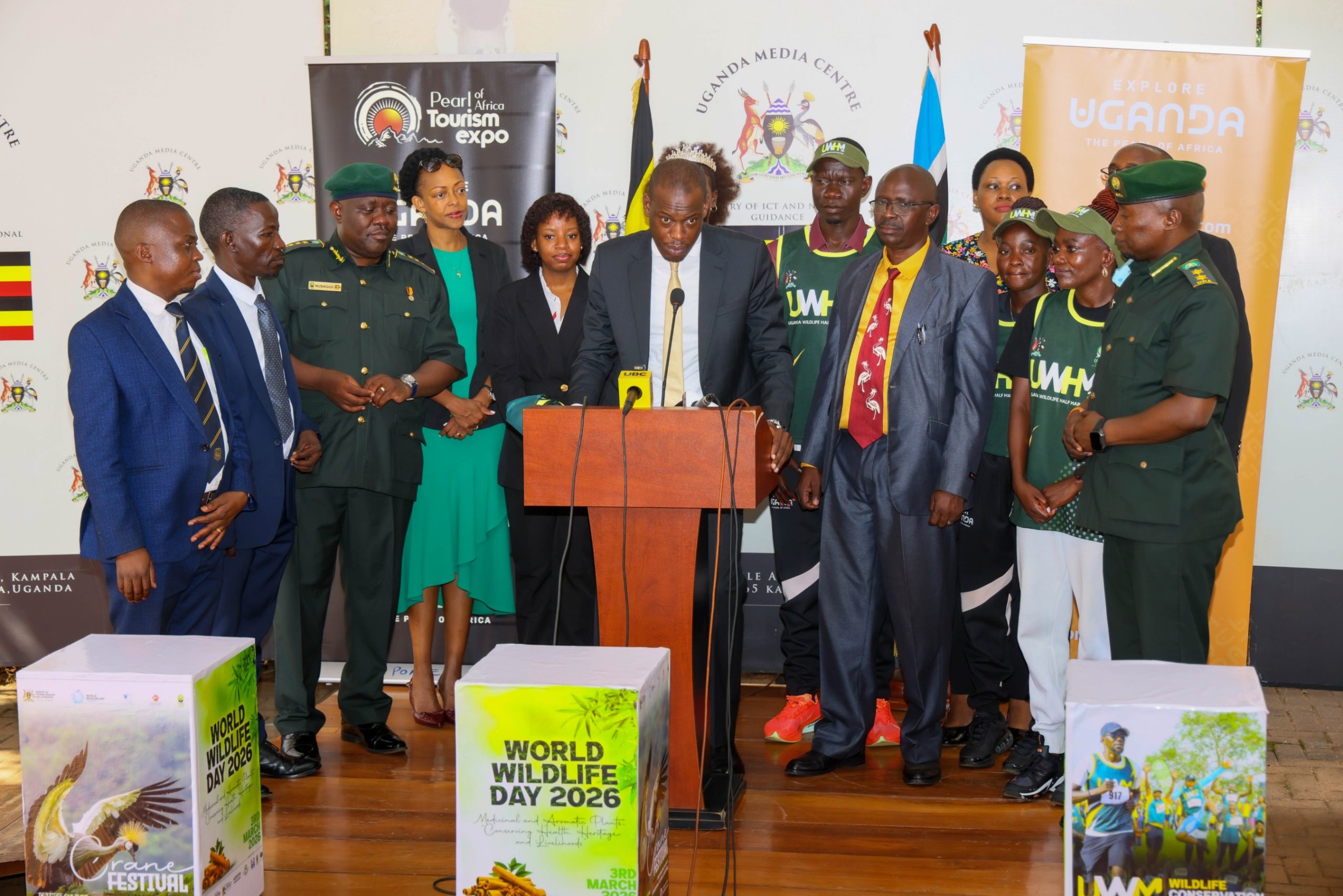
“Uganda registered 1.65m tourists and 1.7b$ in 2025,” Hon. Mugarra at wildlife day Launch
As the world prepares to celebrate world wildlife day, Uganda has once again positioned itself at the heart of conservation-driven action. This year’s build-up to world wildlife day goes beyond speeches and symbolism. Embracing movement, participation, and purpose. At a time when conversations around conservation need urgency and inclusivity, the Uganda Wildlife Half Marathon stands out as a powerful prelude to world wildlife day. Blending sport, awareness, and responsibility.
Held under the global theme “Medicinal and Aromatic Plants: Conserving Health, Heritage and Livelihoods,” The World Wildlife Day official launch brought together government leaders, conservation advocates, tourism stakeholders, and the private sector. All united by a shared vision, protecting Uganda’s rich biodiversity while engaging citizens in meaningful action.
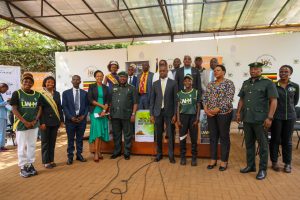
Gov’t leaders, conservatists, tourism stakeholders, the private sector and world champions gathered
The marathon was introduced as more than a race, but the flagship activity leading into World Wildlife Day celebrations. Designed to connect people directly to conservation efforts.
A Roadmap That Builds Momentum Toward World Wildlife Day
The journey toward World Wildlife Day began with the Media Launch on 5th February at the Uganda Media Centre, setting the tone for weeks of engagement and awareness. From there, a carefully sequenced lineup of activities was unveiled. Each designed to amplify conservation messaging and build anticipation toward the main celebrations.
Young people take center stage early in the journey. Primary school conservation competitions are scheduled for 23rd February. Followed by secondary schools on 25th February, then tertiary and university students on 25th February. Through art, dance, music, and drama, students are encouraged to interpret conservation in their own language. Ensuring that World Wildlife Day speaks not just to today’s leaders, but to tomorrow’s custodians of biodiversity.
A carefully sequenced lineup of activities was unveiled.
On 24th February, attention and all roads will shift to Masaka Liberation Grounds for the National Crane Festival. A community-driven celebration dedicated to protecting Uganda’s national bird. Which is usually poisoned when found on private property. The festival highlights coexistence between people and wildlife. Hence reinforcing the idea that conservation extends beyond protected areas and into everyday lives.
That same week, the spotlight turns to those who shape conservation narratives. The Conservation Media Awards on 25th February recognize journalists and storytellers. Whose work keeps wildlife issues visible, relevant, and urgent. An essential pillar of World Wildlife Day advocacy. The conversation deepens further on 26th February during the National Wildlife Conservation Conference, bringing together policymakers, conservationists, researchers, and partners. To reflect on progress, share knowledge, and chart the future of conservation in Uganda. All these events are deliberate amplifiers, building energy and public engagement as the country approaches the defining moments of World Wildlife Day.
Minister Highlights Tourism Growth and Conservation Responsibility
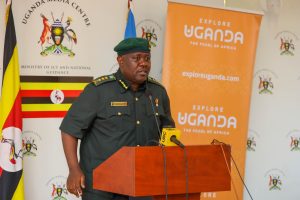
While addressing the launch, the Minister of Tourism, Wildlife and Antiquities, Hon. Martin Mugarra, shared encouraging news. About Uganda’s tourism recovery and growth. He revealed that Uganda registered 1.65 million tourist arrivals in 2025, generating approximately USD 1.7 billion in revenue. Something that hadn’t happened even in the deepest history of Uganda.
The Minister emphasized that this growth is inseparable from conservation. Uganda’s wildlife, landscapes, and biodiversity are the foundation of tourism, and protecting them is a national responsibility. He issued a strong warning against poaching, reaffirming the government’s commitment to safeguarding wildlife and enforcing conservation laws.
Speaking to the World Wildlife Day theme, the Minister highlighted the global importance of medicinal and aromatic plants. He noted that Uganda is home to extraordinary biodiversity, including 11% of the world’s recorded bird species, 8% of global mammal diversity, 19% of Africa’s amphibian species, 14% of Africa’s reptile species, and 1,149 butterfly species.
He emphasized that medicinal and aromatic plants are deeply intertwined with human well-being. Globally, around 80% of people in developing countries, including Uganda, rely on plant-based traditional medicine for primary healthcare. With over 60,000 plant species used worldwide for medicinal, nutritional, and aromatic purposes.
And nearly 90% harvested from the wild, he warned that unsustainable exploitation poses a serious threat to ecosystems and livelihoods. The Minister called for regulated harvesting, conservation, and sustainable use to ensure that these plants continue to support health systems, cultural heritage, and rural economies.
UWA’s Grounded Conservation Action
The Executive Director of Uganda Wildlife Authority, James Musinguzi, outlined the practical work being done to translate policy into action. He highlighted the UWA education fund, which supports children of fallen rangers, noting that over 100 children are already benefiting from the initiative. To address human-wildlife conflict, Musinguzi pointed to the installation of 231 kilometers of electric fencing. Significantly reducing dangerous encounters between communities and wildlife. He also highlighted the establishment of joint command centers and the use of drones for real-time monitoring. Tools that have contributed to reducing deaths of both animals and rangers.
He encouraged landowners with wildlife on private land to register with UWA and responsibly promote tourism. And announced the availability of a dedicated research fund for flora and fauna, inviting researchers to submit proposals for conservation-focused studies. In addition, he highlighted the development of botanical trails at Entebbe Botanical Gardens, UWEC and in national parks. Designed to educate the public and provide hands-on experiences with Uganda’s medicinal and aromatic plant species.
Collaboration, Plants, and Experiential Tourism
Juliana Kagwa, CEO of UTB, emphasized the importance of collectives working together toward one shared cause. Noting that conservation outcomes are strongest when institutions, communities, and partners collaborate. She urged Ugandans to embrace medicinal and aromatic herbs, recognizing their role in health, heritage, and livelihoods. She also revealed that the Uganda Tourism Board plans to introduce herbal immersion experiences into its tourism strategy. To engage more deeply with Uganda’s plant diversity.
Her remarks reinforced the idea that World Wildlife Day is not only about protecting species. But also about reimagining how conservation can be experienced, understood, and valued.
The Marathon Kit Launch, Turning Awareness into Action
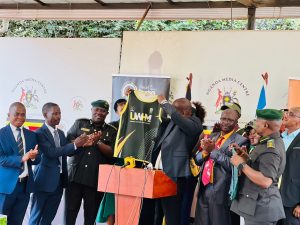
It was against this backdrop that the Minister officially launched the Uganda Wildlife Half Marathon kits. Marking a pivotal moment in the World Wildlife Day journey. Now in its 8th edition, the event becomes historic this year. Featuring 5km, 10km, and 21km distances. Participants can run, walk, or cycle, making the event inclusive for athletes, families, creatives and conservation supporters.
The Minister officially launched the Uganda Wildlife Half Marathon kits
The marathon kits were unveiled in two categories. Bronze Package (UGX 30,000) comprising of a vest, bib, and finisher’s medal. Gold Package (UGX 50,000), comprising of a vest, cap, kit bag, bib, and finisher’s medal. The children’s Package, a full kit at UGX 30,000. Each participant receives an electronic timing chip, to track their run. With medals awarded to all finishers and prizes for outstanding performers.
A wildlife concert will follow the marathon, turning the day into both a celebration and a call to action. The marathon will take place on 1st March at Kitante Primary School Grounds. Serving as the major lead-up event to World Wildlife Day on 3rd March, when Uganda gathers at Entebbe Botanical Gardens for exhibitions, conservation awards, and national celebrations.
As the launch concluded, leaders called upon the public to participate. Not just by attending events, but by becoming active contributors to conservation. In the spirit of World Wildlife Day, every step taken, every story shared, and every voice raised moves Uganda closer to a future. Where wildlife, people, and livelihoods thrive together.